Sorry, I seem to have a hard time getting these “life before plastic” posts out on time. I keep underestimating how long it takes to find research articles on the subject. Or I end up finding information that needs more clarification. But here is what I’ve found so far relating to this month’s challenge of plastic-free bread.
This month’s challenge (PF bread and baked goods) seems a bit easier to figure out how people bought bread before plastic. I say that because I’m thinking of all those period movies with scenes of people buying bread by wrapping it in a cloth or putting it in a paper bag. Also, if you go to a bakery or farmers market we’re not too far removed from how it was for our predecessors. Also, unlike last month’s deli meat challenge, bread is a shelf-stable food which gives it more purchasing options.
Plastic-free bread challenge compared to plastic-free deli meats
The problem I ran into with the previous challenge was that I couldn’t use my own container for deli meat in the store. The reasons I couldn’t do this were both sanitation policies and the tare systems for check-out. But breads don’t have the problem of tare weights because they are usually priced per loaf. Which means my odds of bringing in my own bread bag are a lot better because there won’t be any manual override issues for the check-out system.
A quick history of bread
Bread has been around for a while, over 30,000 years in fact. The main challenges facing bread storage were, and still are, to keep it from getting stale or moldy too quickly. This is especially true with sliced bread, the more surface area exposed to the air, the shorter the bread’s shelf-life. I can’t find any actual dates on when bread started to be wrapped in wax paper (I’m assuming in the 1930s?) but I did find this fun article with pictures of vintage bread wrappers.
Sliced bread, or the commercial bread-slicing machine, was invented in 1928. Sliced bread quickly gained popularity once shelf-life concerns were addressed through packaging. Mornings have always been a busy time in any era, so the convenience of sliced bread was a household hit.
Bread storage before plastic and the packaging used today
Modern bread packaging started with waxed paper and cellophane (invented in the 1900’s). Then progressed to today’s present-day polyethylene bags. An interesting note, the bread clip was developed in the 1950s. I mention the cellophane packaging because when I found this article in Reader’s Digest that had pictures of grocery stores from the ’30s, ’40s, and ’50s it looked like the bread was in plastic bags… But the polyethylene bags wouldn’t have been mass-produced until the 1950s. So I’m assuming those are cellophane bags in the photos. (If anyone has more knowledge on this, please mention it in the comments).
Learning about life before plastic can help inform the present
I enjoy learning about what was done in the past for grocery items. It’s also good to understand why we started using plastic packaging for bread. Now I can be better prepared while trying to go plastic-free for these monthly challenges and beyond. In the case of bread, the problems I’ll have to be mindful of are shelf-life and storage, not having the convenience of pre-sliced bread, and the time required to make my own bread.
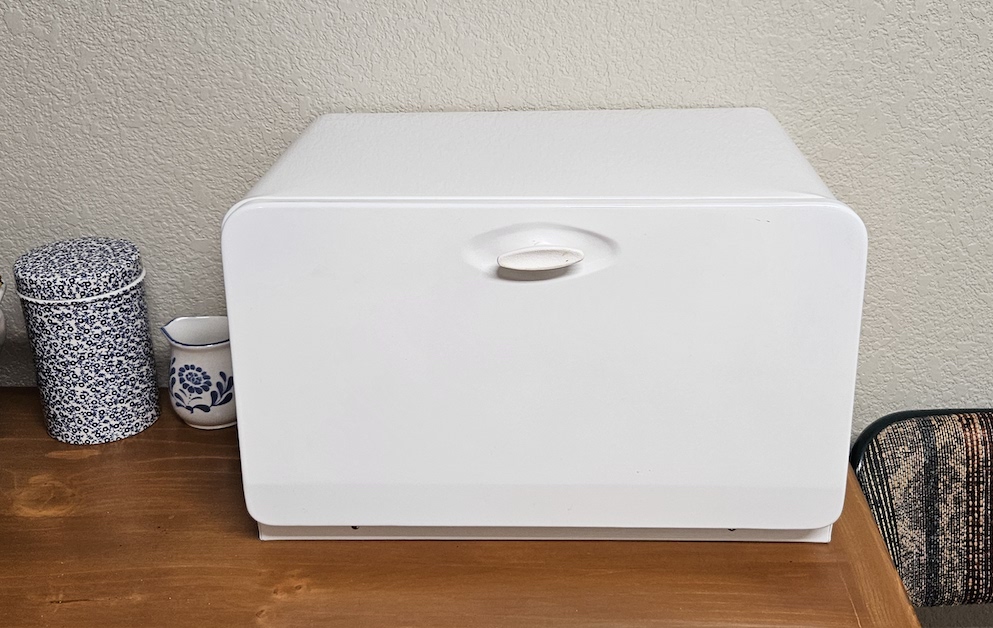
Some interesting things I learned about bread storage from all this, is that dry bread is not the same as stale bread. Bread stays fresher when stored at room temperature (hence the purpose of the breadbox), but is likely to mold faster. The best long-term storage for bread is actually in the freezer, properly wrapped.
Things to keep in mind for this month’s bread challenge
- I need to focus more on storage and utilizing stale/dry bread. There are a lot of old recipes that use stale/dry bread, which makes a lot of sense now.
- The importance of getting a bread box to help with storage or any large airtight container. In Beth Terry’s article about buying plastic-free bread, she uses an old popcorn tin to store her bread.
- Don’t pre-slice the bread if you want it to last longer.
- Make sure to have bread bags for when I go shopping.
I just realized I only have one produce bag that’s big enough for bread. Looks like I’ll be adding “making bread bags” to my eco-friendly craft list this month. Hope this info was helpful to you! Gotta go work on making some GF flatbreads for dinner now.